
Published on: 26/03/2026 · Last updated on: 26/03/2026
How can engineering students develop the systems thinking needed to address the complexity of climate change?
As part of a Centre of Excellence in Engineering and Design Education (CEEDE) summer internship, Mechanical Engineering undergraduate student Fionna Uppilirajan developed The Climate Quest, an interactive workshop designed to embed climate systems awareness at scale across engineering courses. Working under the supervision of Dr Sandhya Moise (Senior Lecturer in Chemical Engineering) and Dr Melusine Pigeon (Senior Lecturer in Electronic and Electrical Engineering), the initiative responds to a recognised need for stronger interdisciplinary thinking, systems awareness and life-cycle understanding within engineering education. The workshop introduces students to the complexity of climate change and its relevance to engineering practice at an early stage in their studies. It has initially been trialled with over 800 first-year students across multiple programmes, including Mechanical Engineering, Electrical and Electronic Engineering, Civil Engineering, Architecture, and Chemical/Environmental Engineering. For Electrical and Electronic Engineering, Chemical Engineering and Mechanical Engineering, the workshop was integrated into the undergraduate curriculum.
Developing foundational systems thinking and interdisciplinary awareness
The Climate Quest foregrounds the systemic and interrelated nature of climate change. It builds awareness of how everyday actions contribute to both the causes and impacts of climate challenges, while providing foundational knowledge to support informed decision-making in future engineering roles. Key learning objectives included developing rapid comprehension skills, teamwork, systems thinking, and the ability to identify engineering opportunities to mitigate climate impacts. The workshop also emphasises interdisciplinarity, future-oriented design thinking and life-cycle considerations in engineering practice.
Using team-based pedagogy to build systems thinking and collaborative problem-solving
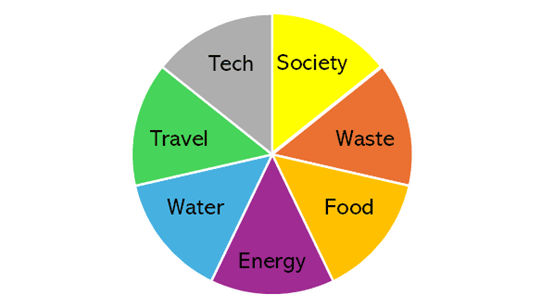
The workshop introduced a structured series of mini-activities based on seven climate-related themes: society, travel, energy, water, technology, food and waste. Activities included matching, sorting, ranking, graph interpretation and true/false tasks, each supported by factual background information to build understanding without promoting subjective viewpoints. Students worked in teams to complete tasks within a 60-minute timeframe, earning ‘cause’ and ‘impact’ tiles, which they then placed collaboratively during a second 60-minute phase on a shared climate map to visualise relationships between themes. This mapping exercise enabled students to see climate change as an interconnected system and to identify potential engineering mitigation strategies within it. Throughout the session, students engaged in rapid problem-solving and analytical discussion, debating whether their cards represented causes or impacts and justifying their thematic placement. The final group discussion encouraged students to propose engineering solutions, reinforcing systems thinking and interdisciplinarity, and helping them connect engineering practice with sustainability considerations in a memorable and engaging way.
Strengthening disciplinary relevance and challenge
The interactive, team-based structure and varied activity formats were particularly effective in maintaining engagement and encouraging collaboration. With further refinement, the final climate map and group debrief could become an even more powerful visual and dialogic tool for supporting reflective thinking about engineering solutions. Future development may include integrating more advanced life-cycle assessment elements or discipline-specific examples to increase relevance across different engineering cohorts. Adjusting activity difficulty or pacing could also help accommodate large cohort sizes and ensure all groups remain appropriately challenged. Further refinement of background information and incorporation of real-world case studies may deepen understanding of the complexity and urgency of climate challenges.
Extending the workshop model across departments and disciplines
The team plans to continue delivering the workshop in the departments where it has already been successfully trialled, and interest has also been expressed by other faculties in adopting it for their undergraduate students. The Climate Quest has been designed for straightforward integration into existing teaching timetables and requires fewer facilitators than workshops such as the Climate Fresk, making it a practical option for large cohorts. By engaging learners in collaborative, reflective and discipline-relevant exploration of climate-related challenges, the workshop offers an accessible way to strengthen sustainability awareness and systems thinking within engineering education. Departments interested in exploring its potential are invited to contact Melusine and Sandhya to discuss opportunities for demonstration and adaptation to suit their specific teaching contexts.